
Meet the Herd
Our team of Directors is made up of amazing people across Turtle Island doing amazing things for Buffalo. This is seen from a circular perspective that no one person is more valuable than the other.

Colin Arlt
Executive Director/Founder
Pronouns: He/They/Him/Theirs
Role: Executive Director/ Captain of the Hunt (leader of Metis Buffalo Hunts)
Name for Buffalo: Vache La Prairie
Bio; Colin is a proud Michif from Lebret, Saskatchewan, now based in Regina. He holds a Bachelor’s Degree in Education from the University of Regina, earned through the SUNTEP program. Colin comes from a distinguished lineage of strong Michif Buffalo hunters, the Poitras family from Red River.
After spending over three years rekindling his personal connection with Lii Bufloo (the Buffalo), Colin, with the support of local Elders, founded a not-for-profit organization called the Buffalo Culture Collective. This organization is dedicated to restoring the Buffalo’s cultural and spiritual significance by rematriating Buffalo products—such as hides—to Indigenous communities across Turtle Island.
In addition to these efforts, the Buffalo Culture Collective is developing a Buffalo Educational Toolkit and collaborating on other impactful Buffalo-related initiatives. Colin’s work reflects his passion for revitalizing traditional relationships with the Buffalo and ensuring its role as a vital part of Indigenous cultures.
Colin is also a devoted father to four lively children and has been happily married to his wife, Courtney, for 11 years.

Taneesha Herbert
Chief Operating Officer
Pronouns: She/they
Tānsi, my name is Anīn šikwa kīn, Taneesha nitišinihkās. Cote šikwa Red River iškonikanik nitōnci. I am anihšināpē-šikwa-āhpitawokohšān0ihkwē. Hello, my name is Taneesha. I am from Cote First Nation and Red River. I am an Anishinaabe and Michif (Métis) woman. I grew up without my cultures but have been actively reconnecting as a Two-Spirit adult.
I was born and raised on Treaty 4 territory within the boundaries of Regina, Saskatchewan. In fall of 2024 I was awarded a Certificate in Reconciliation studies. In spring 2026 I will obtain two Bachelor of Arts; majoring in Psychology and Sociology, minors in Indigenous Studies and Indigenous Health Studies.
I am a board member for Buffalo Culture Collective, a nonprofit aiming to revive the cultural importance of the buffalo for Métis and First Nations. I am self-employed as Sweet-T Alchemy where I offer reiki, spiritual work, essential oil rollers, and more. I am currently creating the foundation for Aunt-T Avenue, through Aunt-T’s Family Wellbeing Services, which is a childcare centre that is family-first, culturally-safe/-relevant programming, and actively addresses the gaps within the community it serves. I recently have accepted a Research Assistant position with the Child Trauma Research Centre, located at the University of Regina. In addition, I am a Teaching Assistant within Psychology, Anthropology, Indigenous Studies, Indigenous Health Studies, and Social Studies. Through these opportunities I have been requested to guest lecture for Anthropology 100 on “Decolonizing Anthropology: Moving forward in a good way”. I am also looking forward to my summer position with Sunlife as a Reconciliation and Indigenous Relations Analyst through the Dean Connor Scholarship, joining a working group with the Associate Vice President of Research to develop an Indigenous-led research centre.
My experiences give me a unique perspective on society. To add to this outlook, I was dead at birth for four minutes, my grandmother survived the Lebret Indian Residential School, my default setting is spiritual and metaphysical, and I have ended many intergenerational cycles within my family. I have survived a lot, but this has only fueled my optimism and drive to make a difference. Through authenticity, initiative, follow-through, accountability and joy I hope to make a difference in this world for the next seven generations. My life is now dedicated to revitalization of Indigenous language, culture, art, and community.
Chi Miigwetch / Grande Marsii for your valuable time

Cheyenne Sego
Board Member
Cheyenne Sego is a proud Anishinaabe Kwe from Sagamok Anishnawbek and a member of the Pike clan. Currently in her final year of a double honours major in Gender Equality & Social Justice and Indigenous Studies at Nipissing University, Cheyenne is preparing to
pursue a Master of Arts in Indigenous Governance (MAIG) at the University of Victoria. This next step reflects her commitment to advancing Indigenous self-determination, governance,
and land stewardship through both academic and community-based work.
Beyond academics, Cheyenne actively contributes to her community as a member of the Endaayaan Awejaa Youth Council. She is passionate about attending conferences and
workshops, where she builds her knowledge bundle to bring valuable insights and tools back to her community. Guided by the Seven Grandfather Teachings, Cheyenne is dedicated to
living a good life and advocating for Indigenous rights, ensuring that traditional values and ways of knowing are woven into contemporary practices.
Cheyenne’s work is deeply rooted in using ancestral science and Indigenous knowledge systems to reclaim Indigenous rights to self-determination, governance, and land stewardship. She is equally committed to deepening her own cultural understanding and fostering connections between communities. Inspired by her daughter, Cheyenne strives to be a good ancestor for the seven generations to come, ensuring a future grounded in resilience, reciprocity, and respect for all living beings. As an advocate for different ways of knowing and Indigenous science, Cheyenne has
developed a deep trust in “gut feelings.” This trust, along with the guidance of the Seven Grandfather teachings, has guided her journey, even when the path was not easy, and ultimately led her to join the Buffalo Culture Collective (BCC). Through her involvement with the BCC, Cheyenne has begun to understand the profound importance of buffalo—not only
for their physical contributions but also for their spiritual, emotional, and mental teachings. The work of Lucille Contreras (Lipan Apache and CEO of the Texas Tribal Buffalo Project) has deeply resonated with her, particularly the emphasis on the role of Indigenous women in the rematriation of buffalo. As life-givers, Indigenous women innately understand how to care for, nurture, and grow not only themselves but also their communities. Cheyenne believes it
is the role of Indigenous women to lead the rematriation movement, braiding traditional values and teachings.


Jessica Surjik
Education Director
Tawnshi kiyawaw, d'shinakooshin Jesska. I live in Regina, though my roots run deep in the Fort Qu’Appelle Valley, within Treaty Four Territory. My family names include Desjarlais, Cardinal, Klyne, and Pelletier. I am a proud Michif/Cree woman, a mother, an educator, and an artist. I am also a student in SUNTEP Regina, currently in my third year of Education, and I speak a little Michif. I proudly trace my ancestry to the Plains Cree and Red River Métis communities.
My journey has been one of reconnection—while I grew up with limited knowledge of my ancestry and culture, I have always been drawn to the power of storytelling, art, and the land. I see the Earth as a relative, and my relationship with plant and animal kin has been foundational to my learning. As a mother, it is deeply important to me that my daughters grow up in a world that honors their culture, existence, and wisdom. I want them to walk through life with pride in who they are, knowing that their voices, stories, and teachings are valued.
The buffalo holds a special place in my heart—not only as a keystone species and a symbol of resilience but as a source of knowledge, sustenance, and balance. I believe that by restoring our relationship with the buffalo, we can build meaningful educational content that reflects Indigenous perspectives, wisdom, and histories. Our youth are our future. They carry the potential to restore, protect, and strengthen our communities for generations to come. By reconnecting them with the buffalo, we are not just teaching history—we are reviving relationships, ways of knowing, and a deep sense of identity. The buffalo teaches us about respect, sustainability, and reciprocity, lessons that are just as vital today as they were for our ancestors. When our youth grow up knowing their culture, language, and connection to the land, they step into their power as future leaders, knowledge keepers, and protectors of our ways.
I am eager to bring my passion, lived experience, and knowledge to this role, working alongside the board to develop engaging, respectful, and accessible buffalo education content. I look forward to learning, collaborating, and contributing to this important work—not only for our present communities but for the generations to come.
Women and buffalo have long been the backbone of our culture and society, carrying the strength, wisdom, and resilience that have sustained our people for generations. Both have provided nourishment, guidance, and a deep sense of kinship, shaping the very foundations of our ways of life. Yet, through colonization and disruption, their roles have been diminished, and their importance overlooked. I hope to see a future where women and buffalo are once again honored, respected and uplifted—recognized not only for their past contributions but for the vital role they continue to play in our collective healing and future.
Through rematriation, reconnection, and reclamation, I believe we can restore balance to our lands, our people, and our communities. Rematriation calls us to return to the teachings of our grandmothers, to rebuild relationships with the land and each other in ways that honor Indigenous ways of knowing. Reconnection is about strengthening those bonds—revitalizing our languages, ceremonies, and traditional knowledge so that they live on in the hearts and minds of future generations. Reclamation is the act of taking back what was taken from us, ensuring that our voices, stories, and identities are not only preserved but celebrated. By embracing these paths, we can move forward with strength, healing our communities and shaping a future rooted in respect, reciprocity, and resilience.
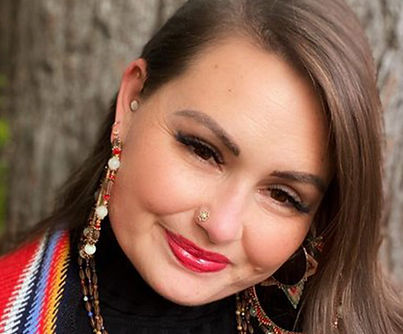
Gabrielle Fayant-Lewis
Board Member
Gabrielle Fayant-Lewis originates from Fishing Lake Metis Settlement, AB. Gabrielle is an award-winning woman for her work in her community, her dedication to supporting young people, and amplifying grassroots efforts. Gabrielle is passionate about cultural resurgence, revitalization and restitution for all Indigenous peoples. She has worked with several Indigenous and non-profit organizations.

Dara Wawatie-Chabot
Board Member
Dara is Anishinabekwe from Kitigan Zibi Anishinabeg and Algonquins of Barrier Lake Quebec. A young mother, student, teacher and leader, they have spent time in Ottawa learning about Indigenous and Canadian politics, grassroots activism and levergaging platforms to enhance the voices of the traditional caretakers of Anishinabe Aki. Their work on the Moose Moratorium focuses on solidarity building, advocacy and momentum building

Hailey Bird Matheson
(she/her)
Board Member
Hailey is an urban Indigenous woman from Peguis First Nation on her maternal side and of Scottish and French ancestry on her paternal side. She is a fancy and jingle dress dancer, a beadwork artist, and prioritizes supporting her relatives in connecting to community, culture, hide work and the land. Hailey is the founder of the ‘Community Cuzzins’ program, which offers cultural and land-based programming as life promotion for Two-Spirit and Queer Indigenous youth in the urban centre of Winnipeg. She has a BSW from UBC and MSW-IK (Masters of Social Work in Indigenous Knowledges) from the UofM.
Hailey has 9 years of experience in frontline work in Vancouver and Winnipeg, primarily in harm reduction, land-based programming, crisis support and trauma therapy. She is currently practicing as a therapist, supporting primarily urban Indigenous people in Treaty One.

TBA
TBA
TBA
TBA